A UK fuel consumption calculator works out how far your vehicle travels on each unit of fuel. In the UK that is usually miles per gallon, or MPG, using the imperial gallon, and it is worked out by dividing the miles you drove by the gallons of fuel you used. Many drivers also use litres per 100km, which is the metric equivalent used in official figures and on the forecourt.
Part of Mileage & Fuel. Start with the main guide: Mileage Check: Verify a Car's Mileage
Updated October 2026 · Independent information, not legal advice
There is no official service that returns your exact real-world figure from a registration, because fuel use depends on how, where and with what load the car is driven. The free lookup can tell you the fuel type, engine size and CO2 where recorded, and from there you can calculate and compare your own numbers. This explains the method, the units, common errors and how to use the result.
How Fuel Consumption Is Calculated
The standard method is simple: fill the tank, note the odometer reading, drive normally, then fill again and record the litres added and the miles travelled.
Working out MPG
- Fill the tank completely and reset the trip meter.
- Drive as normal until the tank is low.
- Fill to the same point and note the litres added.
- Convert litres to imperial gallons by dividing by 4.546.
- Divide miles driven by gallons used.
Working out litres per 100km
Divide the litres used by the kilometres driven and multiply by 100. A lower number is better.
A Worked Example
Suppose you drive 300 miles and add 30 litres of fuel. Thirty litres is about 6.6 imperial gallons, so 300 divided by 6.6 gives roughly 45 MPG.
Why rounding is fine
Small differences in how full you fill the tank affect a single result. Repeating the calculation over several tanks gives a steadier number.
Converting between units
MPG and litres per 100km are linked by a fixed conversion, so any good calculator can translate between them. The US gallon is smaller than the UK one, which is why American MPG figures look lower.
Why UK MPG And US MPG Differ
The UK imperial gallon is larger than the US gallon, so the same car has a higher MPG in UK units. Use UK figures when comparing adverts and handbooks in Britain.
Watch your source
If you read figures on a foreign website, check which gallon it uses before comparing.
Check MPG Using Your Own Records
To check MPG in real life, use fuel receipts, the trip meter and the odometer. Your car's trip computer also shows an average, which is a useful guide but can be optimistic.
Trip computer versus hand calculation
Compare both over a few tanks. If the two differ by a lot, the hand calculation is usually the more reliable.
Keeping a log
- Date and odometer reading at each fill-up
- Litres added and type of fuel
- Miles or kilometres since the last fill
- Notes on conditions, such as heavy traffic or towing
MPG Of My Car By Registration
Drivers often ask for the MPG of my car by registration. The free lookup shows fuel type, engine size and CO2 where recorded, but not MPG, because real-world economy depends on use and condition.
What you can find
Enter the plate into the free MOT history checker to confirm the make, model, fuel and engine size, then look up the maker's published figures for that exact version. Also see car spec check and car specs by reg for spec details.
Why the exact version matters
Models often come in several engines and trims with different fuel figures. Identify the right one before comparing.

An MPG Checker And What It Does
An MPG checker tool typically takes a registration or a model and shows the official fuel economy for that vehicle. The numbers come from manufacturer test results, not from your own driving.
Using official figures wisely
Official figures are a fair way to compare cars with each other, but real-world results are usually different. Treat them as a benchmark.
MPG For Vehicles Of Different Types
The MPG for vehicles varies widely by type. A small petrol hatchback, a diesel estate, a hybrid, a van and a motorbike all behave differently.
- Petrol cars: economy depends heavily on engine size and driving style
- Diesel cars: often more efficient on longer journeys
- Hybrids: better in stop-start traffic, less so at steady motorway speed
- Vans: load and aerodynamics change results significantly
- Motorbikes: light weight helps, but riding style still matters
| Vehicle | Usual measure | Worth noting |
|---|---|---|
| Petrol car | MPG or litres per 100km | Varies with driving |
| Diesel car | MPG or litres per 100km | Short trips can affect it |
| Hybrid | MPG, sometimes higher in town | Depends on battery use |
| Plug-in hybrid | Mixed MPG and electric range | Depends on charging |
| Electric | Miles per kWh | Weather and speed matter |
Electric vehicles
Electric cars are measured by energy use, such as miles per kilowatt hour, rather than MPG. Some sources give an MPG-equivalent for comparison.
Check Fuel Economy Before You Buy
If you are buying, check fuel economy for the exact model, because running costs add up over years.
What to compare
- Official combined figure
- Real-world reports from owners
- Engine size and fuel type
- Insurance group and tax band, where relevant
Pair it with your annual mileage
Estimate how many miles you will drive each year, then see how different economy figures translate into fuel use. Your annual mileage matters more than a small difference in MPG.
Check Car Fuel Economy Using The MOT History
The MOT history does not give fuel economy, but it gives recorded mileage at each test, which helps you work out how much the car has been used. See mileage check.
A mileage sense check
If a car's recorded mileage looks low for its age, compare readings over time to look for a mileage discrepancy or suspected clocking. Good records should rise steadily.
Service records
Well-maintained engines generally use less fuel. A full service history is a good sign.
What Fuel Does My Car Take By Registration
To answer what fuel does my car take by registration, use the registration to confirm whether it is petrol, diesel, hybrid or electric, then check the fuel cap, handbook or label for the grade.
Petrol or diesel
See is my car petrol or diesel for how to confirm the fuel type from a registration.
Wrong fuel warning
Putting the wrong fuel in can cause serious damage. If it happens, do not start the engine, and get specialist help.
Fuel Grades And Labels
Forecourts label fuels with letters and numbers. Petrol pumps are commonly marked E5 or E10 and diesel pumps B7. Your handbook or fuel flap states what the car can use.
Older cars
Some older cars are not suited to certain ethanol blends. Check the official guidance and the manufacturer's advice.
WLTP And Official Fuel Figures
Current official economy and CO2 figures for new cars come from the WLTP test procedure, which replaced the older NEDC cycle. Figures from different test types are not directly comparable.
Why they differ from real life
Labs use standard conditions. Real driving includes hills, weather, tyre pressures, traffic, air conditioning and load.
Why Your Figures Might Be Poor
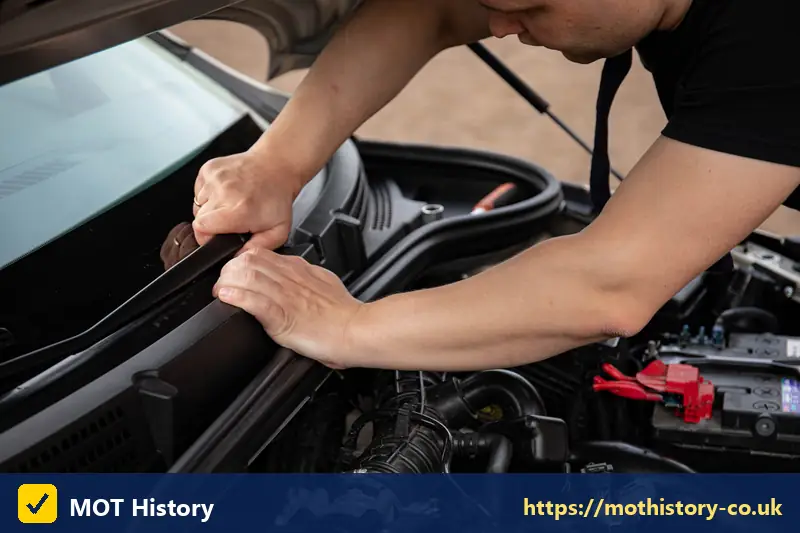
Several common causes affect fuel consumption.
- Tyre pressure too low
- Short trips that never warm the engine
- Heavy loads and roof boxes
- Aggressive acceleration and braking
- Dirty filters or neglected servicing
- Faults such as a failing sensor
Check the basics
See pre-MOT checks for simple checks of tyres and other items. A warning light may also affect economy; see check engine check.
Ways To Improve Fuel Economy
Small habits can help.
- Smooth driving and early lifting off the accelerator
- Correct tyre pressures
- Removing unnecessary weight
- Keeping to a sensible motorway speed
- Regular servicing; see when is my car due a service
Combine with cost tracking
If you track your figures over time, you can see whether changes make a difference.
Fuel Consumption And Vehicle Tax
Tax for many vehicles relates to CO2 and fuel type rather than MPG, but the two are connected. Use car tax calculator and check the current rates on GOV.UK.
Expensive cars
Some cars may be liable for extra charges; see expensive car supplement and confirm details on GOV.UK.
Fuel Use For Business And Mileage Claims
If you use your vehicle for work, keep a log of journeys. Claims depend on the rules that apply to your circumstances, so check current HMRC guidance.
Fleet owners
Small fleets can track MPG per vehicle to spot a problem early.
Turning MPG Into A Running-Cost Estimate
Once you know your economy, you can estimate fuel use over a month or a year without any guesswork about prices.
The basic sum
Divide your expected miles by your MPG to get gallons, then multiply by 4.546 for litres. Multiply by the current pump price to see cost. Check the latest pump prices yourself, as they change often.
Compare two cars
Run the same sum for two candidates using the same annual mileage. A car with slightly better economy but a higher purchase price may not save money if you drive few miles.
Driving Style And Conditions
How you drive often matters as much as what you drive.
Speed and acceleration
Fuel use tends to rise at higher speeds because of air resistance, and hard acceleration burns more than gentle progress.
Temperature and weather
Cold weather, strong headwinds and heavy rain can all raise consumption. Air conditioning and heated seats also add load. That is why winter tanks often look worse than summer ones.
Terrain and traffic
Hills, stop-start traffic and short trips all reduce economy. A steady motorway cruise in a modern car can look far better than a town commute.
Hybrids, Plug-Ins And Electric Cars
These vehicles change the maths.
Hybrids
A conventional hybrid recovers energy when braking, so it tends to do best in town. The petrol engine still supplies most energy, so MPG remains the natural measure.
Plug-in hybrids
A plug-in hybrid can use electricity for a stretch and then petrol. Its MPG depends enormously on how often you charge it, so calculate it over a longer period.
Fully electric
Electric cars use kilowatt hours, and economy is often shown as miles per kWh. Do not try to force an MPG figure from one fill-up.
Used Cars: Signs Of Poor Economy
A used car that uses too much fuel may have a fault or worn parts.
- A check engine light, or one that was recently cleared
- Smoky exhaust or rough idle
- Dragging brakes or worn wheel bearings
- Old spark plugs, filters or oxygen sensors
- Underinflated or mismatched tyres
What to ask the seller
Ask what economy the owner typically gets and how they calculate it. A plausible answer, backed by the car's size and type, is reassuring.
Inspect, do not assume
See vehicle inspection check for a full look at a used car before you buy.
Why Mileage Accuracy Matters Here
Every fuel calculation uses the odometer. If the odometer reading is wrong, your figures will be wrong too, and so will any comparison.
Check the readings
Compare recorded mileage in the MOT history with what the dashboard shows. Differences deserve an explanation, and the same goes for the MOT history of a car advertised as unusually economical.
Digital and analogue dashboards
Some dashboards can be altered, so use more than one source. Service invoices and MOT readings together tell a better story than the dashboard alone.
Common Calculation Mistakes
- Mixing UK and US gallons
- Forgetting to fill to the same level
- Using partial tanks only
- Ignoring fuel used by idling
- Comparing winter and summer tanks
Averages beat single tanks
Use at least three tanks to see a pattern.
Quick Summary
Fuel use depends on your vehicle and how you drive. Calculate from your own records and compare with official figures.
- MPG = miles divided by gallons
- Litres per 100km = litres divided by km times 100
- Real life differs from official figures
Frequently Asked Questions
How do I use a UK fuel consumption calculator?
Fill the tank, note the odometer, drive, then refuel and record the litres added and the miles driven. Convert litres to imperial gallons by dividing by 4.546 and divide miles by gallons to get MPG. A calculator does this for you once you enter miles and litres.
Can I find the MPG of my car by registration?
Not exactly. A registration lookup can identify the make, model, fuel and engine size, and you can then look up the maker's official figure for that version. Your real-world MPG depends on your driving, so calculate it from your own fill-ups.
What is the difference between MPG and litres per 100km?
MPG shows how many miles you drive per gallon, so higher is better. Litres per 100km shows how much fuel you use over 100 kilometres, so lower is better. They measure the same thing in different ways and can be converted.
How can I check fuel economy before buying a car?
Identify the exact model and engine, then compare official figures and owner-reported real-world economy. Combine that with your expected annual mileage to see the impact, and check the MOT history for mileage consistency and any emissions advisories.
Why is my real MPG lower than the official figure?
Official figures come from standard test conditions. Real driving involves traffic, hills, weather, tyre pressures, loads and driving style. Short journeys and faults can also reduce economy. A difference is normal, but a sudden drop may mean something needs checking.
Does the free MOT history show fuel economy?
No. It shows fuel type, engine size, mileage at each test, and emissions details where recorded, but not MPG. Use it to confirm the vehicle details before looking up economy figures or calculating your own.
How accurate is a trip computer?
Trip computers are useful for trends but can be optimistic. Check the figure against a hand calculation over a few full tanks. If the two differ by a lot, rely on your own records.
Does WLTP affect the figures I see?
Yes. WLTP is the test procedure used for current official fuel and CO2 figures on newer cars, and it differs from older methods. Compare figures from the same test type where possible.
What fuel does my car take by registration?
Use the registration to confirm whether it is petrol, diesel, hybrid or electric, then check the fuel cap or handbook for the grade. If unsure, ask a garage. Putting the wrong fuel in can cause expensive damage.
Can I check vehicle MPG for a van or motorbike?
Official figures for vans and bikes are published in different ways, and real-world results vary even more with load and riding style. Calculate it yourself from fill-ups, and compare with figures from the manufacturer for that model.
How often should I calculate my fuel consumption?
Doing it for a few consecutive tanks gives a useful average, and checking again every few months helps you spot changes. A sudden drop in economy may indicate a fault, low tyre pressure or a change in how you use the car.
Is higher MPG always better?
Yes, for the same units, a higher MPG means you travel further on each gallon. With litres per 100km the opposite is true, because a lower number means less fuel used. Always check which measure a figure uses.
Official Sources
Rules, fees and deadlines change. Confirm anything that affects your money or legal position with the official service.