A pre MOT check is a short inspection you do yourself, a week or two before the booked MOT test, to catch the simple faults that cause many failures: blown bulbs, worn wipers, low tyre tread, a cracked number plate or a dashboard warning light. It takes under an hour with a torch and a helper, and it can save the time and cost of a retest.
Part of MOT Status & Expiry. Start with the main guide: MOT Check: Status, Expiry and Test Results
Updated October 2026 · Independent information, not legal advice
The aim is not to replace the tester but to arrive with no obvious problems. A careful pre mot test at home also tells you whether to book a garage for repairs first. The checks below follow the main areas inspected by the DVSA, with notes on what counts as a fail and what you should leave to a professional.
Why A Pre MOT Check Is Worth Doing
Plenty of failures come from small items that cost little to fix. A check at home lets you deal with them on your own terms.
The benefits
- Fewer fails and less stress on the day
- Time to fix things without a deadline
- A chance to spot safety problems early
- A better chance that the MOT certificate is issued first time
Limits of a home check
You cannot see brake pipes, inner tyre damage or rust on the underside without a ramp. Treat your check as a first pass, and do not skip a proper service if the vehicle is due one. If you are buying a used car, the same routine is a cheap way to gauge condition; see what to look for when buying a used car for the wider picture. A vehicle inspection check from a garage goes further if you want a professional opinion.
When To Do It
Aim for one to two weeks before the test. That leaves time to book repairs, order parts and still keep your MOT expiry date.
Timing around your due date
You can usually test up to a month before expiry and keep the same renewal date. Use when is my MOT due to see where you stand, and read can I MOT my car early for how the early window works.
If the date has passed
If the certificate has already run out, you may only be allowed to drive to a pre-booked test or repair. See MOT grace period for the facts and do not assume any leeway.
Start With The Paperwork
Before touching the car, look at what the record says.
Read the last test
Old advisories point to parts that were wearing last year. Search the registration with the free MOT history checker and read the advisory notes carefully. A worn tyre flagged twelve months ago is unlikely to have improved. The record also shows earlier fails, which tell you which areas of the car have given trouble before.
Gather documents
- The V5C, if you have it
- The last MOT certificate or reference
- Your booking confirmation
- Any invoices for recent repairs
Check All Exterior Lights
Lights are one of the most common reasons for a fail, and the easiest to fix.
What to test
Ask a helper to stand behind the car while you operate each light in turn.
- Dipped and main beam headlights
- Sidelights
- Brake lights, including the third light if fitted
- Indicators and hazard lights
- Fog lights
- Reversing lights
- Number plate lights
Headlight condition
Cloudy or cracked lenses can reduce output and aim. Clean them and check they are not loose. If a bulb has failed, replace it in pairs where sensible, because the second one is often close behind. Check that the aim looks level against a wall or garage door at night.
Check The Horn, Wipers And Washers
These small items are easy to overlook.
Wipers
Blades should clear the screen without smearing or juddering. Split or perished rubber is an easy fix.
Washers
The washer bottle should hold fluid and the jets should spray the screen. Check them before the test, not at the test.
The horn must also sound clearly, with a steady tone, and be the correct type for the vehicle. Press it once or twice before the test.

Tyres And Wheels
Tyres are a safety item and get close attention.
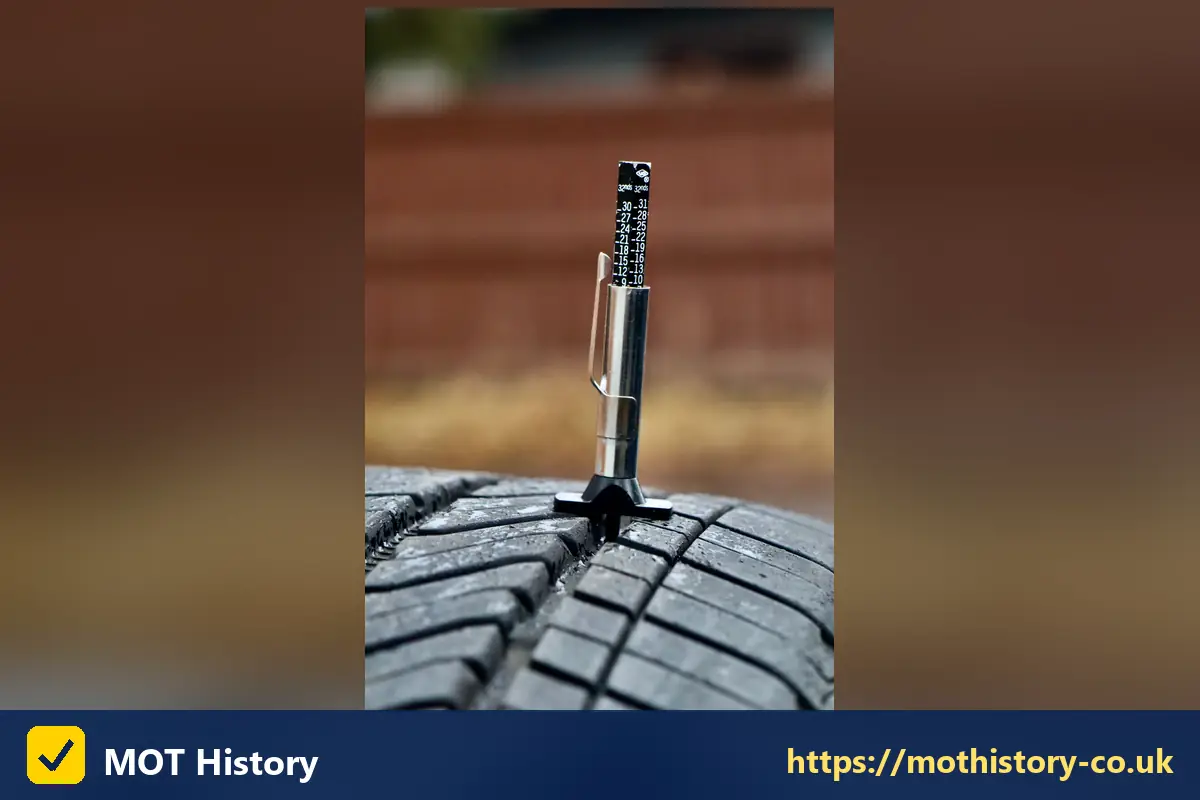
Tread depth
The legal minimum tread for a car is 1.6mm across the central three-quarters of the tread, all the way round. Use a gauge or the raised bars in the tread, but confirm the current rule on GOV.UK.
Condition
- Look for cuts, bulges and cracking on the sidewall
- Check for uneven wear
- Make sure the spare, if carried, is usable
- Check the pressures and set them correctly
Wheels
Wheel nuts should be present and tight. Damaged or corroded alloys can be recorded as defects. Look inside the wheel arch for rubbing, which can point to a tyre or suspension fault, and check that the valve caps and valves are intact.
Brakes You Can Check
You cannot do a full brake test at home, but you can spot warning signs.
What to feel and hear
- A spongy or low pedal
- Squealing or grinding
- Pulling to one side under braking
- A handbrake that does not hold
Fluid and warnings
Check the brake fluid is between the marks and that no brake warning light is showing. Leave any real brake work to a qualified mechanic, because mistakes are dangerous.
Steering And Suspension
Drive the car on a quiet road and listen.
Signs of trouble
Knocking over bumps, a wandering car or a loose steering wheel can point to worn joints or bushes. Bouncing more than once after pressing the corner of the car may mean tired shock absorbers.
Power steering
Check the fluid level where fitted and listen for whining. Do not test it by driving in an unsafe way. Electric power steering has no fluid, but a steering warning light on the dash is taken seriously and should be checked by a garage.
Seats And Seat Belts
Seat belts must be in good condition and work properly.
Belt checks
- Pull each belt out fully and check for fraying
- Make sure it locks when tugged sharply
- Check the buckles latch and release
- Test the warning light if one is fitted
Seats
Driver's seat must be secure and adjustable. A seat that slides or tilts on its own can be recorded.
View, Mirrors And Windscreen
The driver's view matters.
Windscreen
A chip or crack in the driver's main view can cause a fail, depending on its size and position. Get it assessed early. Stickers and satnavs should not block the view.
Mirrors
Interior and exterior mirrors need to be secure and usable, with no heavy cracks.
Number Plates
Plates must be legible and meet the format rules.
What to check
- Clean and undamaged
- Correct font, spacing and colours
- Securely fixed
- Matching the registration on your documents
Read UK number plate rules if yours are unusual or decorative.
Fluid Levels And Leaks
Leaks can cause a fail even when the car seems fine.
Quick checks
- Engine oil between the marks
- Coolant at the right level
- Screenwash topped up
- No dripping under the car
Oil and brake fluid
Leaks near the brakes are a particular worry. Look under the vehicle after it has been parked for a while.
Exhaust And Emissions
An emissions test is part of the examination for most petrol and diesel vehicles.
What you can check
Listen for blowing or rattling, look for black smoke and check the exhaust is secure. A warm engine tends to pass more easily, so a short drive first can help.
Warning lights
An engine management light may point to a fault that affects emissions. See check engine light for a general idea of what the light can mean.
Dashboard Warning Lights
Warning lights can cause a fail if they indicate a safety system fault.
Lights that matter
- ABS and brake warnings
- Airbag or SRS warnings
- Power steering warnings
- Engine management light
What to do
Have a garage read the fault code. Clearing it without fixing the cause is pointless and may be flagged.
Bonnet, Doors And Bodywork
Body condition matters where it affects safety.
Things to check
- Doors open and close properly
- Bonnet latches securely
- No sharp edges from damage
- Sills and structural areas free of serious corrosion
Rust
Surface rust is common, but corrosion near a mounting point or structure can be a major defect.
Fuel, Oil And The Test Itself
The tester may need to run the engine.
Practical preparation
- Have enough fuel for the test
- Make sure the engine has oil
- Remove heavy items from the boot
- Clear the cabin so seats and belts can be reached
Clean vehicle
A clean car is easier to inspect. It also shows care, which matters if any point is a close call. Take out any loose items that could roll around or hide the seat belts, and make sure child seats are fitted correctly if you leave them in.
Electric And Hybrid Cars
Electric and hybrid cars are tested too, with fewer items to check at home.
Differences
There is no exhaust test on a pure electric car. Brakes, tyres and suspension still matter, and heavy battery cars can wear tyres faster. Leave high-voltage checks to specialists. Keep the charging cable out of the way and ask the centre beforehand whether they prefer the battery at a particular level.
Motorbikes And Other Vehicles
Bikes and vans need their own checklists.
Where to read more
See the motorbike MOT guide for bike checks and MOT classes if you are not sure how your vehicle is classified.
What You Should Not Try At Home
Some jobs are best left to professionals.
Leave alone
- Brake pipe and caliper repairs
- Steering rack and suspension arms
- Airbag and SRS system work
- Welding of structural areas
Understanding The Results
Once the test is done, you will get a pass or fail.
| Area | Easy to check yourself | Better left to a professional |
|---|---|---|
| Lights | Bulbs working, lenses intact | Headlamp aim |
| Tyres | Visible damage, pressure, tread look | Internal damage |
| Brakes | Pedal feel, warning lights | Pad, disc and pipe condition |
| Steering and suspension | Play and noises, in general terms | Worn joints and bushes |
| Exhaust | Obvious smoke or noise | Emissions readings |
Categories
- Advisory: monitor it
- Minor defect: minor fault
- Major defect: must be repaired
- Dangerous defect: do not drive
After a fail
Read can you drive with a failed MOT and plan your retest quickly.
Checking A Car You Might Buy
The same walk-round helps when you view a used car, although you do not know its history.
Use the record alongside your eyes
Compare what you see with the MOT history. If the last test lists corrosion or worn brakes, look for them. If the mileage looks odd, read the mileage check notes. A seller who has made repairs should have invoices, and you can ask which garage did the work.
Do not skip other checks
A home inspection cannot reveal outstanding finance or a write-off. Use a separate vehicle history check before you pay.
Common Mistakes
A few slip-ups repeat.
Avoid these
- Leaving the check until the night before
- Ignoring old advisories
- Clearing warning lights without fixing the cause
- Forgetting the number plate lights
- Using unsuitable bulbs
Myths About Pre-MOT Prep
Some myths mislead.
Three myths
- A fresh service always guarantees a pass
- A clean car cannot fail
- Garage pre-checks replace the real test
Quick Checklist
A short list for the driveway.
Five-minute version
- Lights: all working
- Tyres: legal and inflated
- Wipers and washers: clear the screen
- Horn, mirrors and belts: working
- Warning lights: none showing
Frequently Asked Questions
What is a pre MOT check?
It is a self-inspection you carry out before the real test to catch easy faults such as bulbs, wipers, tyres and warning lights. It does not replace the official MOT test, but it can save a retest and help you arrive prepared. Do it one or two weeks ahead so you have time to repair problems.
How long does a pre mot test take?
A careful check of lights, tyres, fluids and basic safety items usually takes under an hour. You will need a helper to watch the lights while you operate them. Allow extra time if you find faults, and book repairs before your MOT expiry date arrives.
What are the most common MOT failures I can avoid?
Faulty lights, worn tyres, poor wipers and washers, damaged number plates and warning lights on the dashboard are all common and often simple to fix. Brake and suspension faults matter too, but they usually need a garage. Checking the previous advisories can tell you where to look first.
Can I do a pre-MOT brake test at home?
Not a full one. You can check for warning signs such as a spongy pedal, noise, pulling or a weak handbrake, and you can look at fluid levels. Real brake efficiency testing needs proper equipment, and brake repairs should be left to a qualified mechanic.
Should I clear warning lights before the test?
No. A warning light is a symptom, and clearing it without fixing the fault is pointless. The light can return, and an unresolved safety fault may still cause a fail. Have a garage read the fault code and repair the cause first.
What tyre tread is legal for a car?
The widely quoted legal minimum for cars is 1.6mm across the central three-quarters of the tread around the whole tyre. Many drivers change earlier for safety. Confirm the current rule on GOV.UK and check all tyres, including the spare if you rely on it.
Do I need to clean my car for an MOT?
You do not need a show-car finish, but a reasonably clean vehicle is easier to inspect. Clear the boot and seats so the tester can reach belts and mounting points. A test can be refused if a vehicle is too dirty or cluttered to inspect safely.
Does a service replace a pre-MOT check?
Not completely. A service covers wear and maintenance, but it is not the same as an MOT inspection, and garages follow different checklists. Some do a pre-MOT inspection as a separate job, which is worth asking for if you would rather pay someone else.
Can I check my MOT history before the test?
Yes. Enter the registration into a free MOT history checker to see past results, advisories and recorded mileage. Advisories from last time are a helpful guide to what may fail this year. It covers Great Britain records only, as Northern Ireland tests are held by the DVA.
What if my car fails despite my checks?
A fail is not unusual, because some faults cannot be seen at home. Read the defect list, arrange repairs and book a retest within the time limit. A retest may be free or part-priced in some circumstances, and GOV.UK has the current rules.
Why do pre-MOT checks not replace the real test?
A test centre assesses roadworthiness against the standard for your vehicle's test class, using equipment and lift access you will not have at home. Your checks simply catch easy faults first. After the test you may be handed a VT20 pass certificate or a VT30 refusal notice, so read either carefully and keep it.
Official Sources
Rules, fees and deadlines change. Confirm anything that affects your money or legal position with the official service.