Most motorbike MOTs are needed once a bike reaches its third anniversary of first registration, then every year, unless it is exempt. Motorbikes are tested as Class 1 (smaller engines, typically up to 200cc) or Class 2 (larger engines). The test checks that the bike is roadworthy and meets emissions and noise limits, and the result is stored in the DVSA MOT history.
Part of MOT Status & Expiry. Start with the main guide: MOT Check: Status, Expiry and Test Results
Updated October 2026 · Independent information, not legal advice
Riders often mix up what a motorcycle test covers, where it can be done and how to read the record afterwards. Below is what happens, how to prepare, what commonly fails and how to check a bike before you buy it. Confirm current rules on GOV.UK, because limits and exemptions can change.
Do Motorbikes Need An MOT?
Yes, in most cases. A motorcycle normally needs an MOT test from the third anniversary of its first registration, and then once a year, unless it qualifies for an exemption. MOT motorcycles go through the same DVSA scheme as cars, and a pass is normally issued as a VT20 certificate while a fail is recorded on a VT30 refusal notice.
Mopeds and scooters
Mopeds, scooters and small-capacity bikes are not automatically excused. If the vehicle is registered as a motorcycle, moped or similar, it usually needs a test. Check the V5C and GOV.UK if you are unsure.
Sidecars and trikes
Sidecar outfits and three-wheelers can fall under different categories. Read about MOT classes and ask a test centre to confirm what applies before you book. Electric motorbikes and scooters are tested too, although they have no exhaust to inspect, so the focus shifts to brakes, tyres, steering and general roadworthiness.
Class 1 And Class 2 Explained
Motorbikes are divided mainly by engine size. The test content is similar, but the class affects who can test the bike.
| Feature | Class 1 | Class 2 |
|---|---|---|
| Typical bikes | Smaller-engined motorbikes | Larger-engined motorbikes |
| Engine size | Below the class threshold | Above the class threshold |
| Test basics | Same broad areas checked | Same broad areas checked |
| Where to confirm | V5C or GOV.UK | V5C or GOV.UK |
Class 1 bikes
Class 1 covers motorcycles up to a stated engine size, typically 200cc. Many learner-friendly machines sit here.
Class 2 bikes
Class 2 covers larger motorcycles. Most touring bikes, sports bikes and big scooters fall in this group.
How to be sure
Engine capacity appears on the V5C. The what MOT class is my vehicle explanation shows how to confirm it.
When Your First Test Is Due
The first test is normally due at the third anniversary of the bike's first registration. That is when the MOT certificate becomes a legal requirement.
Finding the date
Enter the registration into the MOT history checker or read when is my MOT due. The date sits in the MOT record.
Testing early
You can usually test up to a month before expiry and keep the same renewal date. Read can I MOT my car early for the general idea, which also applies to bikes.
Finding Motorbike Mot Testing Near Me
Not every garage tests bikes. A centre must be approved for the relevant class, and it needs the right equipment.
Searching sensibly
A search for motorbike mot testing near me shows many results, but ask each centre two questions first: do you test Class 1 or Class 2, and what is the lead time?
Practical tips
- Phone ahead rather than assume
- Ask whether the tester will need the bike fuelled
- Check parking and opening times
- Use MOT near me advice for general searches
Getting A Mot Bike Ready
A little preparation saves a failed test and a retest.
Headline checks
- Tyres with adequate tread and no cracks
- Brake pads and discs in good order
- Chain and sprockets tensioned, lubricated and not worn
- All lights, indicators and the horn working
- Legible number plate
- Mirrors secure and usable
Deeper checks
See the general pre-MOT checks you can do yourself for ideas that also suit bikes. Wash the bike so the tester can see welds and fasteners, make sure there is enough fuel and oil for the test, and charge the battery if the starter has been sluggish. Spend ten minutes with a torch looking for leaks, loose bolts and cracked rubber. Any fault you find now is cheaper to fix before the test than after a fail.
Chain, Sprockets And Drive
A worn chain is a common cause of advisories and failures.
What testers look for
A chain that is too loose, too tight, rusted or missing links will attract attention. Worn or hooked sprocket teeth and a damaged guard can also be noted.
Belts and shaft drives
Belt-drive and shaft-drive bikes are checked for condition and leaks rather than chain stretch. A cracked belt or a weeping final-drive seal can still lead to an advisory or worse, so look at these when you service the bike.
Brakes And Stopping
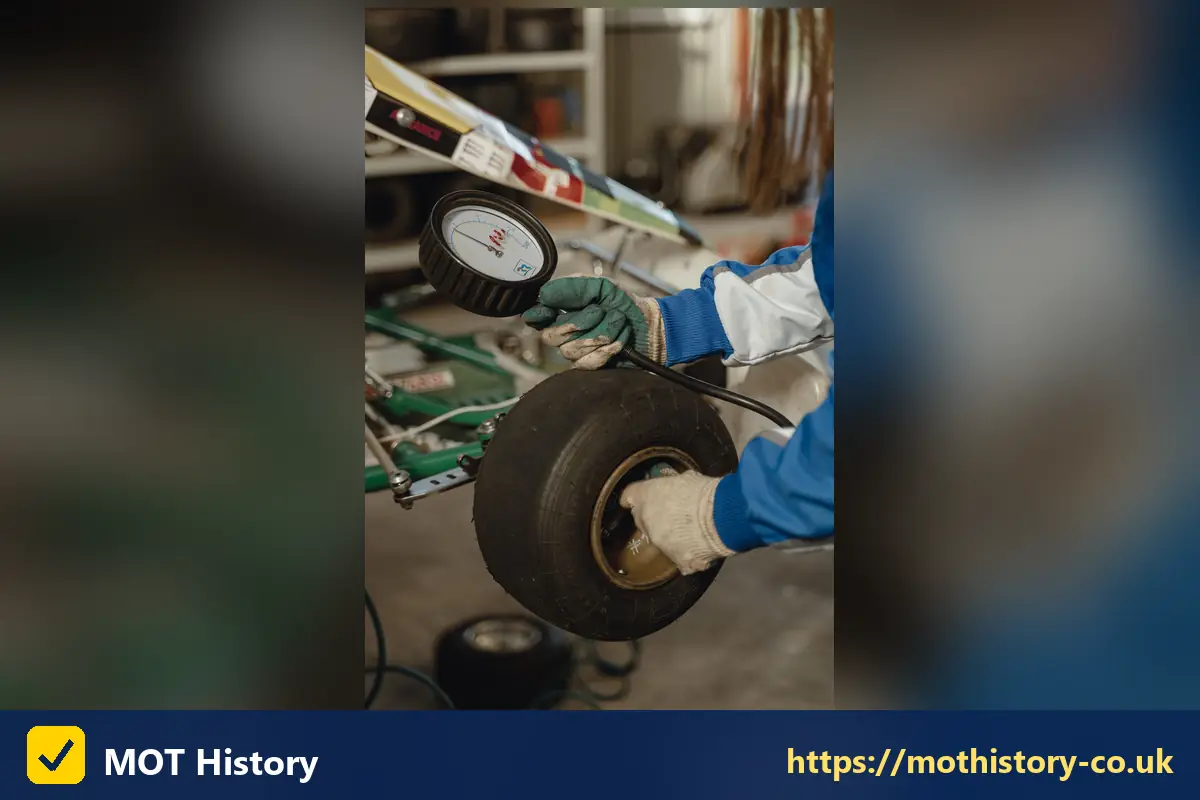
The brake test looks at efficiency and balance.
Common fail points
- Pads worn to the limit
- Discs scored or warped
- Leaking calipers or hoses
- A spongy or sticking lever
- A rear brake that does not work properly
Why it matters
Brakes are a major defect area. A bike that cannot stop reliably may be treated as a dangerous defect. Because the rider has so little margin, testers take brake condition seriously, and it is the area where cutting corners on maintenance is most likely to show up in the MOT history.
Tyres And Wheels
Tyres hold the bike on the road, so they get close attention.
Tyre checks
Tread depth, sidewall damage, bulges and correct size are all looked at. Tyres that are old and cracked can fail even if the tread is legal.
Wheels and bearings
Bent rims, loose spokes and worn wheel bearings can be recorded as defects. Tubeless and tubed wheels are checked in similar ways, and corrosion on alloy wheels near the bead seat is worth a look.
Steering, Forks And Suspension
Steering must be smooth and free from play.
Forks and shocks
Leaking fork seals, worn bushes and oil on the brakes are typical findings. Steering head bearings should not feel notchy or loose.
Handlebars and controls
Handlebars need to be secure and cables free of fraying or kinks.
Lights, Horn And Electrics
Electrical items are simple to check at home.
Quick list
- Headlight dip and main beam
- Brake light on both levers
- Indicators flashing at the right rate
- Horn audible
- Switches working properly
Aftermarket additions
Badly fitted accessories, such as loose wiring for extras, can cause problems.
Exhaust, Noise And Emissions
The exhaust must be secure and not leak, and noise should not exceed limits.
Emissions test basics
A bike can face an emissions test appropriate to its age and type. Excess smoke or a badly modified system can cause a fail.
Aftermarket exhausts
A non-standard exhaust may still pass if it is compliant and marked. A loud, unmarked system may not. Keep any paperwork that came with it, because it can help if the test centre queries the noise level. If you ride a track-only system on the road, expect a problem.
Frame, Footrests And Bodywork
The frame is the backbone of the bike, and testers check it for damage, cracks and corrosion.
Items checked
- Frame condition
- Footrests and pegs
- Stands
- Seats secure
- Body panels with no sharp edges
Crash damage is a particular concern. A bike that has been dropped or written off and repaired can carry hidden frame issues, so consider a check on whether a vehicle has been written off style search before buying.
Number Plate And Identification
The registration plate must be legible and correctly positioned.
Plate rules
Fonts, spacing and colours are regulated. See UK number plate rules for the broad picture.
VIN and frame numbers
Testers may compare identification numbers with documents. Read motorbike chassis number check if you need to locate yours.
Test Results For Bikes
As with cars, a bike test ends in a pass or fail.
Categories
- Advisory: something to monitor
- Minor defect: a small issue
- Major defect: must be repaired
- Dangerous defect: do not ride the bike
Certificates
A pass is recorded electronically. See MOT certificate for how to get, check or replace one.
If A Bike Fails
A fail means the bike needs repairs before it can have a pass.
Riding after a fail
You must not ride a bike with a dangerous defect, and riding without a valid certificate can lead to penalties. Read can you drive with a failed MOT and confirm the position on GOV.UK.
Retests
A retest may be free or part-priced if you return within a set time. The time limit and arrangements are listed on GOV.UK.
Reading Motorbike Mot History
Motorbike mot history shows past tests, advisories and recorded odometer readings, and it is one of the best free checks for a used bike.
What to look for
- Repeated advisories that were never fixed
- Mileage that jumps or falls
- Long gaps between tests
- Failures for chain, brakes or steering
Where to see it
Use the MOT check tool. The record draws on DVSA data for Great Britain. Searching for mot bike records is simple: one registration gives you every test on file. Read the notes as well as the pass and fail line, because advisories often describe wear that the next owner will have to pay for.
Buying A Used Motorbike
History is useful, but it is not the whole story.
A buyer's checklist
- Compare the MOT record with the seller's claims
- Check the V5C and registration details
- Run a motorbike HPI check for finance and write-off issues
- Look at the bike itself for signs of a crash
- Check the tax status using vehicle tax status
What MOT history cannot show
It does not show insurance, outstanding finance, write-off status or service history.
Seasonal Riding And Laying A Bike Up
Many riders park a bike over winter, which raises its own questions about tests and tax.
Off the road
If a bike will not be used on the road, the owner can declare it off the road with a SORN, which is a declaration that a vehicle is off the road. A bike that is not being ridden still deserves a check before it returns to use.
Waking a bike up in spring
Stale fuel, flat batteries, perished tyres and seized brakes are typical after a long rest. Book the test for when the bike is ready, not when it has just come out of storage. The MOT expiry date does not pause just because the bike was stored, so read the record before the season starts.
Exemptions And Older Bikes
Some older motorcycles may not need a test.
Historic vehicles
A bike that meets the historic rules and has not been substantially changed may be exempt. See MOT age exemption and confirm with the DVLA.
Declare it correctly
If you claim an exemption, you generally must do so properly through the official route, so do not guess. Keep in mind that an exempt bike must still be roadworthy, and insurers and police may expect it to be in a safe condition regardless of the test rules.
Northern Ireland And Other Rules
Northern Ireland has its own test run by the DVA.
Riders in Northern Ireland
See MOT in Northern Ireland for how testing differs across the UK.
Common Mistakes
Riders trip over the same issues.
Watch out for
- Booking with a centre not approved for bikes
- Forgetting to tax the bike
- Turning up with a flat battery
- Ignoring a worn chain
- Leaving the test until the last day
Myths About Motorbike MOTs
Some myths persist.
Three myths
- Small bikes do not need a test
- A pass means the bike is mechanically sound
- A custom exhaust always fails
Frequently Asked Questions
Do motorbikes need an MOT?
In most cases yes. A motorcycle normally needs a test from the third anniversary of its first registration and then every year, unless it is exempt. Mopeds and scooters are included if registered as motorcycles or similar. Check your V5C and GOV.UK if you are unsure whether an exemption applies.
What class is a motorbike MOT?
Motorbikes are tested as Class 1 or Class 2, separated mainly by engine size, with Class 1 typically up to 200cc and Class 2 above. Some unusual vehicles, such as trikes, may fall elsewhere. Check your V5C for engine capacity and ask the test centre to confirm which class they will book.
Where can I find motorbike mot testing near me?
Ask garages whether they are approved to test your class of bike, because not all are. Use a general search, then phone ahead to confirm class, availability and any preparation they need. Booking early helps, especially at the start of the riding season when demand rises.
How do I see motorbike mot history?
Enter the registration into a free MOT history checker. You should see past passes and fails, advisories and recorded odometer readings for Great Britain. It is useful when buying a used bike, but it does not show insurance, finance or write-off status.
What are the commonest reasons a mot bike fails?
Typical reasons include worn tyres, poor chain and sprocket condition, weak brakes, non-working lights, loose steering components, leaking forks and illegible number plates. A quick check before the test catches many of these and can avoid a retest.
Can I ride to the test centre without an MOT?
Generally you can ride to a pre-booked test if the bike is otherwise roadworthy and legally taxed and insured. You must not ride a bike with a dangerous defect. Check the current wording on GOV.UK, and do not take risks with a bike you think is unsafe.
Do classic motorcycles need a test?
Not always. A bike that meets the historic vehicle rules and has not been substantially changed may be exempt, but you usually need to declare that correctly. Confirm the rules on GOV.UK, and consider a voluntary check if you are unsure about safety.
What happens if my motorbike fails its MOT?
You will be told which defects caused the fail. Repair them and return for a retest, which may be free or part-priced if done within the set time. Do not ride the bike if any defect is dangerous, and keep the paperwork.
Is the MOT test for motorbikes different from cars?
The principle is the same, but the checks suit bikes, including chain, forks, steering head bearings and exhaust noise. The test class differs, and the centre must be approved to test bikes. Results are stored in the same DVSA history system.
Will a motorbike MOT show up online?
Yes, results for Great Britain normally appear in the online MOT history soon after the centre uploads them. If it is missing after a reasonable time, contact the test centre and check the registration. Northern Ireland bikes are tested separately by the DVA.
How long does a motorbike MOT take?
It is usually quicker than a car test, but the time depends on the centre and the bike's condition. Ask when booking and allow extra time for any advisories. See how long an MOT takes for general guidance.
Official Sources
Rules, fees and deadlines change. Confirm anything that affects your money or legal position with the official service.