Finding a good car garage comes down to three things: whether the work is carried out by competent car mechanics, whether the price and scope are agreed in writing first, and whether the garage will explain what it found in plain language. The MOT history of your vehicle is a useful starting point, because it shows what testers have already flagged as advisories and failures.
Part of MOT Status & Expiry. Start with the main guide: MOT Check: Status, Expiry and Test Results
Updated October 2026 · Independent information, not legal advice
Whether you need routine car repair and maintenance, a fix after a failed test or simply a trustworthy place for future work, the same principles apply. This covers how to choose, what to ask, how an MOT fits in, what mobile mechanics can and cannot do, and what to do if a job goes wrong. Final legal and testing rules are on GOV.UK and with the DVSA.
What A Garage Actually Does
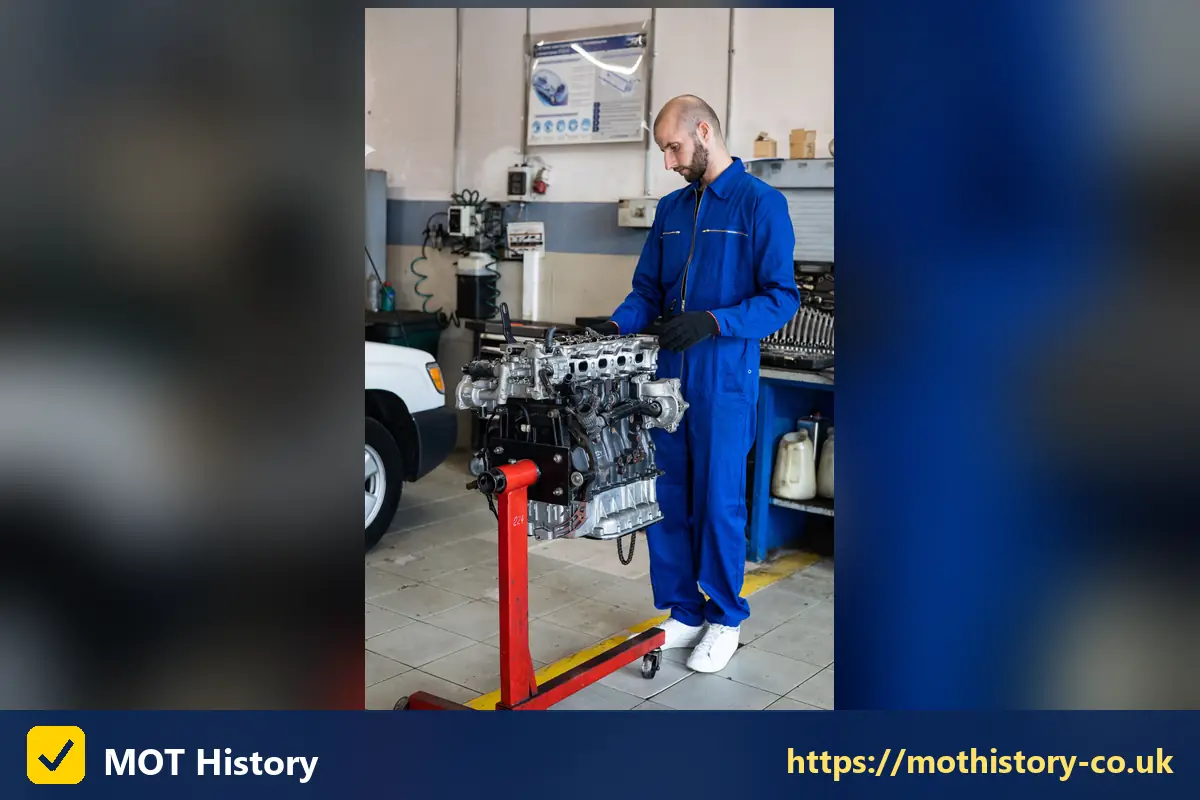
A garage carries out servicing, repairs and sometimes MOT testing, but these are different activities.
Many disputes begin with a mismatch in expectations. A customer books a "service" expecting the garage to fix everything the car needs, and the garage understands it as a scheduled list of checks and replacements. Asking what is included, in writing, removes most of that confusion.
Servicing versus repair versus testing
- Servicing is scheduled maintenance that follows the manufacturer's interval
- Repair fixes a fault that has appeared
- An MOT test is a legal roadworthiness check at an authorised centre
Why the difference matters
A service does not include an MOT, and an MOT does not include a service. See car service and MOT for how they are combined.
Types Of Garage
Different workshops suit different vehicles and budgets.
Independent garages
Often family-run, they may offer flexible pricing and long-term relationships, and the quality ranges widely.
The best ones are worth keeping for years, because they get to know your car's history and can spot changes early. The weakest ones cut corners, so it is wise to try a small job first before handing over a large one.
Franchised dealers
Main dealers specialise in one make, use manufacturer parts and have brand-specific diagnostic equipment.
Fast-fit centres
They handle tyres, exhausts, batteries and brakes quickly, and are best for common, simple jobs.
Specialists
Some focus on a type of work, such as transmissions, electrics, classics or electric vehicles.
| Garage type | Typical strength | Typical drawback |
|---|---|---|
| Independent | Often flexible and personal | Quality varies, so check reviews |
| Franchised dealer | Brand-specific knowledge | Often costs more |
| Fast-fit centre | Quick for common jobs | May suit simple work best |
| Specialist | Deep knowledge of one area | May be limited to certain makes or work |
Car Mechanics: What To Look For
Good car mechanics combine knowledge with clear communication.
- Recent, relevant experience with your make or engine type
- Willingness to explain the fault and show the old part
- Written estimates before work begins
- Honest advice about what is urgent and what can wait
- Tidy, organised premises and sensible equipment
Qualifications
Training routes and trade bodies exist, but membership alone does not guarantee quality. Ask about experience with your type of vehicle.
Car Maintenance Near Me
A search for car maintenance near me returns many results, so judge them on substance.
Quick filters
- Distance you can manage for drop-off and pick-up
- Opening hours that fit your routine
- Courtesy car or lift availability
- Clear communication by phone or message
Checking before you book
Read recent reviews with caution, look for patterns rather than single comments, and ask friends or neighbours for local recommendations.
Using MOT History To Choose What To Fix
Your vehicle's MOT history shows what testers noted in the past. Use the free MOT history checker with the registration.
Advisories
An advisory is something the tester noticed that is not yet a failure, such as slight wear. It is a prompt for a garage to look at.
Repeated items
If the same advisory appears year after year, the wear may be developing. A garage can advise when it becomes urgent.
The MOT history does not say how urgent, only that the tester noticed it. A mechanic with the car on a lift can judge whether a part has a few months or a few weeks left, and can give you a sensible repair order.
The MOT Test In Brief
The MOT test is a roadworthiness and emissions check carried out at an authorised test centre, regulated by the DVSA in Great Britain.
Who needs one
Most vehicles need an MOT from the third anniversary of first registration, and then normally every year.
If the car is not in a fit condition when the MOT expires, the legal duty stays with the keeper. Driving without a valid MOT can lead to penalties and can affect insurance, apart from the narrow exception of driving to a pre-booked test or repair, so check the official guidance.
What it is not
It is not a service, and a pass does not guarantee the car will stay reliable. See MOT meaning for the basics.
Test Centre Versus Garage
Not every garage is an MOT test centre. Only authorised centres can test.
Finding an authorised centre
GOV.UK has a search service. See MOT near me for how to pick one.
Testing and repairing at the same place
Many centres both test and repair. That is convenient, but you are free to have a failed car repaired elsewhere.
MOT Test Classes
The test class depends on the vehicle type, for example cars, motorbikes or larger vehicles.
Why class matters
Different classes have different checks and equipment. Check what MOT class is my vehicle if you are unsure.
Choosing a centre
A centre must be approved for your vehicle's class. Ask before booking for a van, bike or unusual vehicle.
The centre's own approval appears in the official search, and a phone call settles any doubt. It is better to ask than to arrive with a vehicle the centre cannot test.
Pass, Advisory And Fail
Results are grouped, and understanding them helps you choose repairs.
- Pass: the vehicle met the standard on the day
- Pass with advisories: fine today but worth watching
- Minor defect: recorded but not a failure
- Major defect: a failure
- Dangerous defect: a failure and the vehicle should not be driven
| Result | What it means | What to do |
|---|---|---|
| Pass | Met the standard on the day | Keep the certificate |
| Pass with advisories | Passed, with items to watch | Plan to monitor or fix them |
| Fail | A defect needs putting right | Repair and retest |
Certificates
A pass certificate is often called a VT20, and a fail certificate a VT30. You may hear garages use those codes. See MOT certificate.
After A Fail: What To Do
If the car fails, you have choices.
- Read the list of major defect and dangerous defect items carefully.
- Ask the centre to explain anything unclear.
- Get a written estimate for repairs, from the testing centre or another garage.
- Decide on repairs in order of safety.
- Arrange a retest.
Driving after a failure
Whether you can drive depends on whether the previous MOT is still valid and whether any defects are dangerous. See drive with a failed MOT.
The Retest
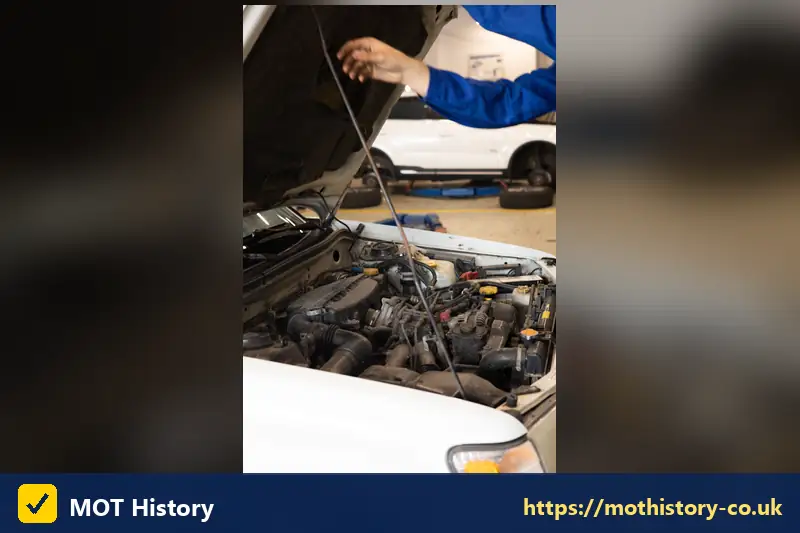
A retest checks that the failed items have been fixed.
Timing
Retest terms depend on whether the car stays at the centre and how soon it returns. Check the current rules on GOV.UK.
If you move the car to another garage for repair, ask that garage to aim for a finish inside the time allowed, and book the retest before you collect the car so you are not left waiting for a slot.
Partial and full retests
Whether it is a partial or full retest depends on timing and what failed. Ask the centre to explain the arrangement.
Choosing Where To Get Repairs Done
You are not obliged to use the test centre for repairs.
Reasons to use another garage
- Better price or availability
- A specialist who knows your model
- Your own trusted mechanic
- Convenience near home or work
Reasons to stay
The centre has already seen the problem, and the retest may be simpler if the car stays.
How To Get A Fair Quote
A clear quote protects both sides.
- Ask for it in writing, with parts and labour separated
- Ask about a diagnostic fee and whether it is credited if you proceed
- Ask whether parts are new, used or reconditioned
- Ask how long the work will take
- Ask what happens if more faults are found
Comparing quotes
Compare like with like: the same parts quality, the same scope, the same warranty. The cheapest quote can be the most expensive if it omits something.
It also helps to ask what is not included. Quotes that leave out fluids, disposal charges or further diagnostic time can look cheaper until the final invoice arrives. A garage that is upfront about these extras is usually easier to deal with.
Questions To Ask Any Garage
- Do you work on my type of vehicle?
- What is your warranty on parts and labour?
- Will you contact me before extra work?
- Can I see the old parts?
- How do you take payment and when?
Red flags
Pressure to decide immediately, vague estimates, refusal to put things in writing and unexplained "additional work" deserve caution.
Mobile Mechanics
A mobile mechanic comes to you, which suits simple jobs.
What they can usually do
- Battery replacement and basic electrical checks
- Brake pads and discs in some cases
- Servicing on driveways where it is safe
- Diagnostics with a code reader
Limits
Some jobs need a lift or specialist kit, which a driveway cannot provide.
Mobile MOT: Does It Exist?
Many people search for a mobile MOT or mobile MOT testing, and MOT at home.
The reality
In most cases an MOT must be carried out at an authorised test centre using approved equipment. A test at your house in the usual sense is not typically available. Check the current position with the DVSA.
What is available
Some services collect your vehicle, take it to a test centre and return it. That is a collection service, not a test in your drive. Also, a mobile mechanic can fix known issues before the test.
Collection And Delivery Services
Collection-and-return services exist for people who cannot easily visit a centre.
Things to check
- Who actually tests the car
- Whether the driver is insured to drive your car
- Whether the price includes the test and any retest
- How long the car will be away
Is it worth it?
For busy households it can be. The test itself is the same as at any centre.
Preparing For The MOT
Simple checks before the test can avoid a fail. See pre-MOT checks.
- Lights, including number plate lights
- Tyres and tread
- Wipers and washer fluid
- Horn and seatbelts
- Warning lights on the dashboard
Number plates
A damaged or badly spaced plate can fail. See UK number plate rules for how they are checked.
Warning Lights And Diagnostics
A dashboard warning light should not be ignored.
Engine management
See check engine light and engine checks for what they generally mean.
Brake and airbag lights
These can cause an MOT fail and are also about safety. Get them diagnosed by competent car mechanics.
Brakes And Tyres
These are the commonest areas of advisory and failure.
Brakes
Signs include noise, pulling to one side, a soft pedal or vibration. A garage checks pads, discs and fluid.
Brake fluid absorbs moisture over time, so it is usually replaced on a schedule rather than when it fails. Ask the garage when it was last done, because old fluid reduces braking performance under heavy use, such as on long descents or when towing.
Tyres
Check tread depth, sidewall damage and uneven wear. Replace damaged tyres promptly, because tyre defects are a safety issue.
Tyre age matters as well as tread. Rubber hardens with time, and a tyre with plenty of tread but many years on the sidewall may still be a poor choice. Check the date code and ask a garage for their view if you rarely drive.
Suspension And Steering
Worn parts may not show until a tester puts the car on a lift.
Signs to watch for
- Knocks over bumps
- Uneven tyre wear
- Steering that drifts or feels loose
- A bouncy ride
Repair planning
These parts often come as advisories first, which gives time to plan repairs.
Keep an eye on tyre wear patterns, since they often reveal alignment or suspension problems before a tester does. Wear on one edge is a classic sign, and fixing the cause usually saves money on the next set of tyres.
Lights, Wipers And Visibility
Small faults cause many failures.
Bulbs and lenses
A blown bulb is a quick fix, but cracked lenses and aim problems need attention.
Windscreen
Damage in the driver's line of sight may fail. Wipers and washers must work.
Exhaust And Emissions
The emissions test is part of the MOT.
What is checked
Exhaust condition, noise and emissions levels, which depend on fuel type and age.
Common causes of fail
- Leaks and corrosion
- A faulty catalytic converter
- An engine running too rich or lean
- Diesel particulate filter problems
Corrosion And Structure
Rust in structural areas can be a failure.
Why it matters
Corroded sills or mounting points affect roadworthiness. A garage can advise on repair options, and whether the repair is worthwhile.
A structural repair done properly involves cutting out the weak metal and welding in new material, not just covering it. Ask how the repair will be done and whether the garage will show you the area afterwards. Cosmetic patches over weakened metal can fail the next test.
Older vehicles
The older the car, the more important the underside inspection.
Servicing: How It Fits In
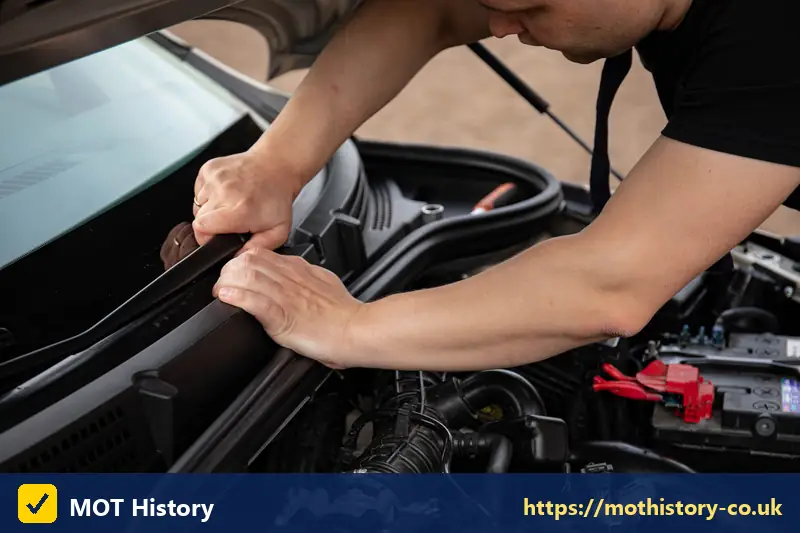
A service keeps the vehicle reliable, while the MOT checks legal minimums.
Service levels
Garages often offer different service levels. Ask what is included, not just the name.
Basic, intermediate and full services mean different things in different workshops. Ask for the checklist and compare it with the manufacturer's schedule for your mileage or time. Some items, such as spark plugs, cam belts or gearbox oil, may not be included unless requested.
Intervals
Follow the manufacturer's schedule. See when is my car due a service.
Service History
A record of past work supports resale and helps the next garage.
Keep everything
Invoices, stamped service books and parts receipts. A digital folder works well.
Photographs of receipts stored in a single phone album are better than a drawer of crumpled paper. When you sell, a tidy history is one of the strongest reasons a buyer will pay the price you ask.
Buying a car
See car service history for what to ask for and what cannot be checked by registration.
Timing The MOT And The Repair
Plan repairs around the MOT expiry date.
Early testing
You can normally test up to a month before expiry and keep the same renewal date. See can I MOT my car early.
Changing the date
If you want a different cycle, see change an MOT date.
MOT Expiry And Tax
A car without a valid MOT usually cannot be taxed. Check your MOT status before you book work.
Checking dates
A free MOT check shows the expiry date and status. See when is my MOT due.
Book the MOT and any repairs comfortably before the date. A garage with a free slot a fortnight before expiry is more helpful than one with no availability on the last day, and a retest after a fail needs time too.
Costs: How To Think About Them
No figures are given here, because prices vary by area, vehicle and garage.
What affects cost
- Labour rates in your area
- Parts quality
- Time needed to diagnose
- Whether access is difficult
See also
See MOT cost for how testing fees work and how long a test usually takes, with how long an MOT takes.
Consumer Rights And Repairs
When a garage does work, the law expects reasonable care and skill.
Practical steps
- Keep the quote and invoice
- Raise concerns promptly and in writing
- Give the garage a chance to put it right
- Photograph faults and old parts
- Escalate through trade bodies or official advice if needed
Official help
Citizens Advice and GOV.UK explain consumer rights, and they should be your source for the latest rules.
When A Repair Goes Wrong
Problems happen even with good garages.
Step by step
- Stop driving if it is unsafe.
- Contact the garage with clear details.
- Ask for an inspection and a fix.
- Get an independent opinion if needed.
- Keep all paperwork.
Independent assessment
A second garage can assess the quality of the earlier work, often for a fee.
Used Car Buyers
Garage work before purchase can save money.
A pre-purchase inspection
See vehicle inspection check and what to look for when buying a used car.
Look at MOT history
A run of advisories for the same part is a useful negotiating point.
Electric And Hybrid Vehicles
Not every garage works on high-voltage systems.
Why specialist skills matter
High-voltage parts need training and safe procedures. Ask whether the mechanic is trained.
An electric or hybrid car may also need a different approach to lifting and recovery. A garage unfamiliar with the model can damage battery components, so a simple question about experience is entirely reasonable.
Routine items
Brakes, tyres, suspension and cabin parts are similar to other cars, but EV tyres can wear differently.
Motorbikes And Vans
Different vehicles need different skills.
Motorbikes
Bike specialists know chains, carburettors and fork seals. See the motorbike MOT guide.
Vans
Vans carry heavier loads and often cover high mileage, so they suit garages used to commercial vehicles.
Classic And Older Cars
Older cars have simpler systems but need patient skills.
Finding specialists
Owner clubs often recommend trusted workshops.
Parts for older cars can take time to find, and a specialist with a network of suppliers may save you both money and delay. Ask about their approach to rust, since it is the usual enemy of older vehicles.
MOT exemption
Some very old vehicles may be exempt from the MOT, but roadworthiness remains the keeper's responsibility. See MOT age exemption.
Many owners of exempt classics still choose to have a voluntary test or a garage inspection each year, because a fresh set of eyes spots brake and corrosion problems before they become dangerous.
Northern Ireland
MOT testing in Northern Ireland is run by the DVA, not the DVSA.
What changes
Test centres, booking and certificates differ. See MOT in Northern Ireland.
Repairs
Garages in NI do repairs in the same way, but retest rules are NI-specific.
Fleet And Business Use
Businesses benefit from a steady garage relationship.
For small firms with one or two vans, the garage is part of the business. Agreeing priority for urgent repairs and a clear way to approve work by message can save days of lost income when something breaks.
- A maintenance schedule for every vehicle
- Clear approval limits for repairs
- Central records of MOT, tax and service dates
- A backup garage for urgent work
Downtime
Quick turnaround matters. Ask for realistic timescales and whether a courtesy vehicle is offered.
Common Mistakes
- Ignoring advisories until they become failures
- Choosing purely on price
- Approving work without a written estimate
- Skipping the service because the car passed the MOT
- Not keeping invoices
- Assuming any garage can test
The fix
Keep a simple log, ask questions and treat your vehicle's MOT history as a maintenance checklist.
A notebook or phone note listing the date, mileage, work done and the garage used is enough. Over a few years it becomes the most useful document you own about the car, and it makes every later conversation with a mechanic quicker.
Myths
"A pass means it is perfect"
No. It means it met the minimum standard on the day.
"The MOT includes a service"
It does not.
"An MOT can be done at home"
In most cases no, because it needs an authorised centre.
"Only main dealers can do warranty-safe servicing"
Often independent garages can service without harming a warranty if they follow the schedule, but check your agreement.
Quick Checklist Before Booking A Garage
- Reg number to hand
- A list of symptoms, including when they happen
- Recent MOT history from the free checker
- Service history paperwork
- Questions ready
- Budget discussed
After the work
Ask for old parts, check the invoice against the quote, and keep the paperwork.
Official Sources
The DVSA and GOV.UK set out MOT rules and test centre approval.
What the free lookup shows
The free checker shows MOT status, expiry date and test history with advisories and failures, but not service history or repair records.
When to ask for help
Use official consumer advice if you cannot resolve a dispute with a garage.
Before escalating, write a short, factual account of what was agreed, what was done and what went wrong, with dates. A calm, documented complaint is far more likely to be resolved than an angry phone call.
A Worked Example: A Car That Failed On Brakes And Tyres
Imagine a family hatchback fails its MOT test with a major defect on a front tyre and a worn brake disc.
Reading the fail certificate
The list separates what failed from what is advisory. Ask the tester to point to each item on the car if you are unsure. Seeing a worn tyre or scored disc for yourself makes the decision easier.
Sequencing the repairs
Safety items first. Tyres and brakes are not negotiable, whereas a cosmetic advisory can wait. Get a written quote, agree the work and ask for the old parts back.
Booking the retest
Once repairs are done, arrange the retest within the period allowed by the current rules. Keep the invoice with the retest paperwork so you have a clear record of what was fixed and when.
A Worked Example: A Used Car Bought With Advisories
You buy a five-year-old car and its MOT history shows advisories for rear suspension bushes and a slight oil leak across two tests.
Turning history into a to-do list
Take the printout to a garage and ask for a health check. The garage can tell you whether the items have worsened and what they would cost to fix, so you can plan ahead rather than react.
Negotiating
If you see the history before buying, raise repeated advisories with the seller. They are fair grounds for a discount or for the seller to fix the items first.
How A Garage Diagnoses A Fault
Diagnosis is the skilled part of car repair and deserves to be paid for fairly.
Symptoms first
A good mechanic begins by asking when the problem happens: cold start, at speed, when turning, in wet weather. Note these details before you visit.
Tools and testing
- A code reader gives fault codes but not the answer by itself
- A road test reproduces symptoms
- Visual checks on a lift reveal leaks and wear
- Measurements confirm whether a part is out of tolerance
Why guesses cost money
Replacing parts at random is expensive. Ask the garage how they confirmed the cause before replacing anything costly.
Parts: New, Used And Reconditioned
The choice of parts affects price, life and warranty.
Main options
- Genuine parts from the vehicle maker
- Good-quality aftermarket parts made to the same specification
- Used parts from breakers, suitable for some body and trim items
- Reconditioned parts, such as rebuilt alternators or gearboxes
Questions to ask
Which option is being fitted, what warranty it carries and whether the choice could affect your vehicle's warranty or resale value. Safety-critical items are rarely a place to economise.
Paperwork To Keep After Any Job
A clear paper trail helps with resale, warranty claims and disputes.
- The written estimate, before work begins
- The final invoice with parts and labour itemised
- Any warranty terms in writing
- A record of mileage at the time of the work
- Photographs of unusual faults or old parts
Why mileage matters
Mileage recorded at each service or test builds a consistent story. The MOT history records odometer readings at each test, so a garage invoice that fits the same pattern is reassuring.
Seasonal checks also prevent breakdowns, because some problems are predictable and a little preparation helps.
Before winter
- Battery condition, since cold weather exposes weak ones
- Tyre tread and pressures
- Wiper blades and screenwash
- Antifreeze strength
- Lights, which matter more in dark, wet conditions
Before summer
Check cooling and air conditioning, and think about tyre condition for long journeys with a full load. A garage car health check before a holiday is cheap reassurance compared with a roadside breakdown.
Frequently Asked Questions
How do I find a good car garage?
Ask friends and neighbours, check recent reviews for patterns, and look for clear communication and written estimates. Ask whether they work on your make of vehicle and what warranty they offer. Use your MOT history to see what has been flagged, then ask the garage to explain each item. Trust your impression of how they treat your questions.
Can I get a mobile MOT at home?
In most cases an MOT must be carried out at an authorised test centre with approved equipment, so a test on your driveway is not normally available. Some companies collect and return your car for testing. A mobile mechanic can fix known issues before the test. Check the latest rules with the DVSA.
Is a garage allowed to test my car if it is not an MOT centre?
No. Only authorised test centres can carry out an MOT test. Many garages repair and service without testing. Use the official GOV.UK service to find a centre approved for your vehicle's test class, and ask before you book if you have a van, motorbike or unusual vehicle.
What is the difference between a service and an MOT?
A service is maintenance, such as fluids and filters, following the manufacturer's schedule. An MOT is a legal check of roadworthiness and emissions on the day of the test. One does not replace the other. A car can pass an MOT and still be due a service, and a serviced car can fail an MOT.
Do I have to get repairs done where the MOT failed?
No. You can take the car elsewhere for repair and then arrange a retest. Retest rules depend on how soon you return and whether the car stays at the original centre, so check the current terms on GOV.UK. Get a written estimate first and compare quotes for like-for-like work.
What is an advisory on an MOT?
An advisory is something the tester noticed that is not a failure today but may need attention, such as wear on a tyre or a slight leak. It is a good prompt to ask a garage to take a look. Repeated advisories for the same part on your MOT history suggest wear that is getting worse.
How much will repairs cost?
It depends on the vehicle, the fault, the parts used and the garage's labour rate, so no honest figure can be given without seeing the car. Ask for a written estimate, separate parts and labour, and ask what happens if extra faults are found. Compare like-for-like quotes before approving work.
Can I drive my car after a failed MOT?
It depends. If the previous MOT is still valid and the failure does not include a dangerous defect, you may be allowed to drive it, but it must still be roadworthy. A dangerous defect means it should not be driven. Check the guidance in full on GOV.UK before you move the car.
How do I find car maintenance near me?
Use the official MOT test centre search for testing and local recommendations for maintenance. Look at opening hours, distance, communication and whether they service your type of car. Read several recent reviews looking for patterns, and ask about warranties before booking.
Should I book the MOT and service together?
Many people do, because it saves a trip, and some garages offer a combined package. Make sure you know what each covers and that you are not paying twice for overlapping checks. You can also have them done separately at different places if you prefer.
What documents should I bring to a garage?
Bring the registration details, any recent invoices or service history, and your MOT certificate or a note of the last test. The free MOT history shows past advisories. Having the V5C is not usually necessary for routine work, but some garages ask for it for specific jobs.
Can a mobile mechanic help before an MOT?
Yes, for straightforward jobs such as bulbs, wipers, batteries and some brake work. They cannot carry out the test itself, and some repairs need a lift or specialist equipment. Ask what they can do on your driveway and what must go to a workshop.
What if a garage does a poor repair?
Stop driving if unsafe, contact the garage in writing with clear details and give them a chance to put it right. Keep the quote, invoice and photographs. If it is not resolved, consider an independent assessment and official consumer advice, and check the GOV.UK guidance on your rights.
Does the MOT history show repairs?
No. It shows MOT test results, advisories, failures and recorded mileage at each test, not repairs or servicing. Repairs and servicing are recorded only in the paperwork kept by you and the garages. Use the MOT history as a guide to what was flagged, and ask garages to explain work.
How do I know if a mechanic is trustworthy?
Look for clear explanations, written estimates, willingness to show old parts and a warranty on work. Recommendations from people with similar vehicles are valuable. Be cautious of high-pressure selling, vague quotes and refusal to put things in writing. A small first job is a reasonable way to test a new garage before you need a big repair.
Can a garage charge for a diagnostic?
Yes, it can, because finding a fault takes skilled time and equipment. Ask beforehand how the diagnostic is charged and whether the cost is credited against the repair if you go ahead. Agree a limit before work starts so you are not surprised, and get the findings in writing.
Is it worth repairing an old car that fails its MOT?
It depends on the cost of the repair compared with the car's value and how long you expect to keep it. Get a written quote, ask what else is likely to need attention soon, and compare it with the cost of a replacement. Structural corrosion and major mechanical faults often make repair hard to justify.
Can I do my own repairs before an MOT?
Yes, for simple jobs such as bulbs, wipers and topping up washer fluid, if you are competent and follow safe procedures. Safety-critical work such as brakes and steering is best left to trained mechanics. Whatever you do, make sure the work is done properly, because the tester will judge the result, not the effort.
Official Sources
Rules, fees and deadlines change. Confirm anything that affects your money or legal position with the official service.